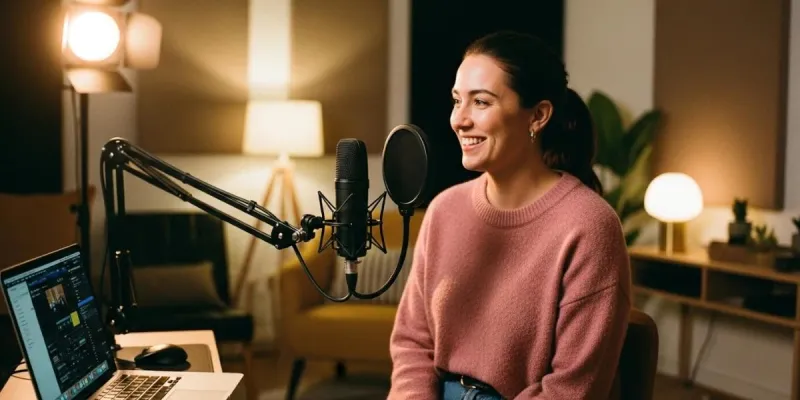
Millions of Followers, Nobody Home: The Loneliness Hiding Inside the Creator Economy's Biggest Win
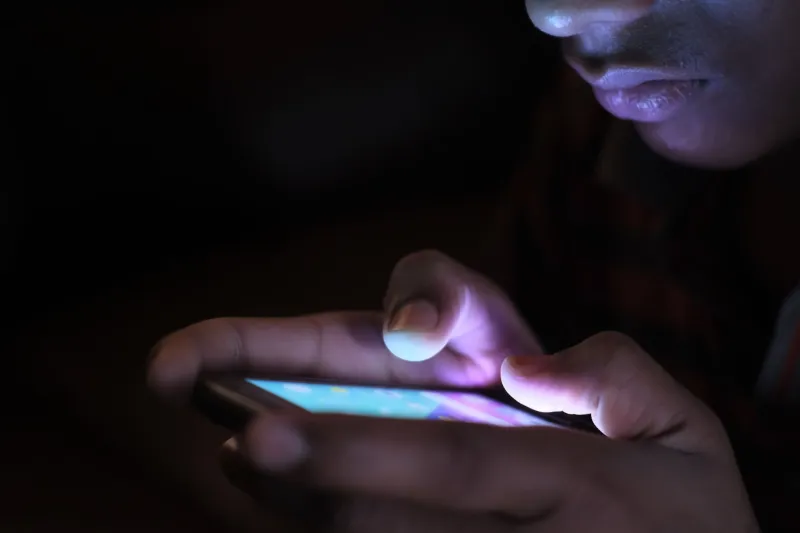
There's a particular kind of quiet that settles in after you've spent three hours watching someone else live their life. You close the app, maybe laugh at something they said, maybe cry a little — and then you sit there in your actual apartment, in your actual life, and the silence hits different. The creator you just watched probably just crossed another revenue milestone. You probably feel more alone than you did before you opened your phone.
This isn't a personal failure. It's a design feature.
The Numbers Don't Lie, But They Don't Tell the Whole Story Either
The creator economy is projected to hit $480 billion by 2027, according to Goldman Sachs. Meanwhile, the U.S. Surgeon General declared loneliness a public health epidemic in 2023, noting that roughly half of American adults report measurable levels of social isolation. These two facts exist in the same cultural moment — not by coincidence, but because they're feeding each other in ways most of us haven't fully reckoned with.
Platforms are optimized to deliver the feeling of connection without the infrastructure that makes connection real. You comment on a video, you get a heart back. You subscribe, you get a shoutout. You buy the merch, you wear the community like a badge. But none of that builds the kind of relationship that shows up when your car breaks down or when you need someone to sit with you through something hard. The transaction is clean. The loneliness is not.
Creators, for their part, are often running the same broken loop from the other side of the camera.
When Going Viral Means Going It Alone
Ask any mid-tier creator — someone pulling maybe 500K subscribers, a decent brand deal here and there — what their social life looks like, and the answer tends to get uncomfortable fast. The parasocial dynamic doesn't just affect audiences. It warps the creator's sense of intimacy too.
When millions of people feel like they know you, actual human relationships start to feel inadequate by comparison. Your real friends don't have context for your work. Your audience has all the context but none of the access. You exist in this weird middle space where you're technically never alone and almost always lonely.
Meghan Tonjes, a musician and YouTuber who's been vocal about mental health in the creator space, has talked about the disorientation of building what looks like a thriving community while feeling completely unseen as a person. That experience is not rare. It's practically a rite of passage.
And the bigger the channel gets, the worse the distortion becomes.
The Community Illusion
Platforms love the word community. It's in every product announcement, every creator fund pitch deck, every rebrand. But a comment section is not a community. A Discord server with 80,000 members and three active moderators is not a community. A live stream where the chat moves so fast the creator can't read it is not a community.
Real communities are built on reciprocity, shared stakes, and some degree of mutual accountability. What most platforms have built is an audience with community aesthetics slapped on top. It looks like belonging. It doesn't function like it.
This distinction matters because audiences believe it's real. Studies on parasocial relationships consistently show that fans experience genuine grief when creators go on hiatus, genuine joy when creators succeed, genuine betrayal when creators disappoint them. These emotional responses are not fake. But they're happening in a relationship that is fundamentally one-directional, no matter how many Q&As get posted.
The fan is emotionally invested. The creator is professionally invested. Those are not the same thing, and pretending they are is the core of the paradox.
Monetizing the Gap
Here's where it gets really uncomfortable: the loneliness isn't a bug that the industry is trying to fix. It's a revenue stream.
Subscription tiers exist to sell proximity. Patreon, OnlyFans, Substack — the entire premium content model is predicated on the idea that paying more gets you closer. A Discord mention. A voice memo. A birthday DM. These micro-moments of access are priced and packaged because the hunger for genuine connection is so acute that people will pay for the simulation of it.
This isn't a moral indictment of creators who use these tools. Most of them are just trying to build sustainable careers in a system that offers no other path. But it's worth naming clearly: the industry has figured out how to charge admission to the feeling of being known without ever actually delivering it.
And the audience keeps paying, because the alternative — sitting with the quiet, doing the slow work of building real relationships — is harder and less immediately satisfying than opening an app.
So What Does Any of This Actually Fix?
There's no clean answer here, which is probably why this conversation keeps getting deferred. Platforms aren't going to restructure their engagement models around human wellbeing because human wellbeing doesn't drive session time. Creators aren't going to stop monetizing intimacy because it's one of the few things that actually pays. And audiences aren't going to stop craving connection, because that's just being human.
What might actually move the needle, even slightly, is honesty about the transaction. Creators who name the dynamic — who say, out loud, this is a parasocial relationship and it has limits — tend to build audiences that are healthier and, ironically, more loyal. It's counterintuitive, but transparency about what the relationship isn't makes space for real appreciation of what it is.
For audiences, the work is harder. It means using parasocial content as a supplement to real human connection rather than a replacement for it. It means noticing when a creator's presence in your life is filling a void that should be filled by people who can actually show up.
None of this is easy. The platforms are designed to make it as hard as possible.
Turned Out
The creator economy's rise is genuinely remarkable. The democratization of media, the independent voices, the cultural commentary that never would have survived a network pitch meeting — there's real value in all of it. TurnedOut.TV is literally built on the premise that independent creators matter, and they do.
But mattering and connecting aren't the same thing. And the industry's obsession with growth metrics — views, subs, revenue, reach — has created a machine that can tell you exactly how many people watched something and almost nothing about whether anyone actually felt less alone because of it.
The creator economy is winning by every financial measure we've built to track it. The question nobody wants to sit with is: winning for whom, exactly, and at what cost to the rest of us scrolling through the dark.