Feeding the Beast vs. Starving It: How Creators Are Winning by Going Around the Algorithm
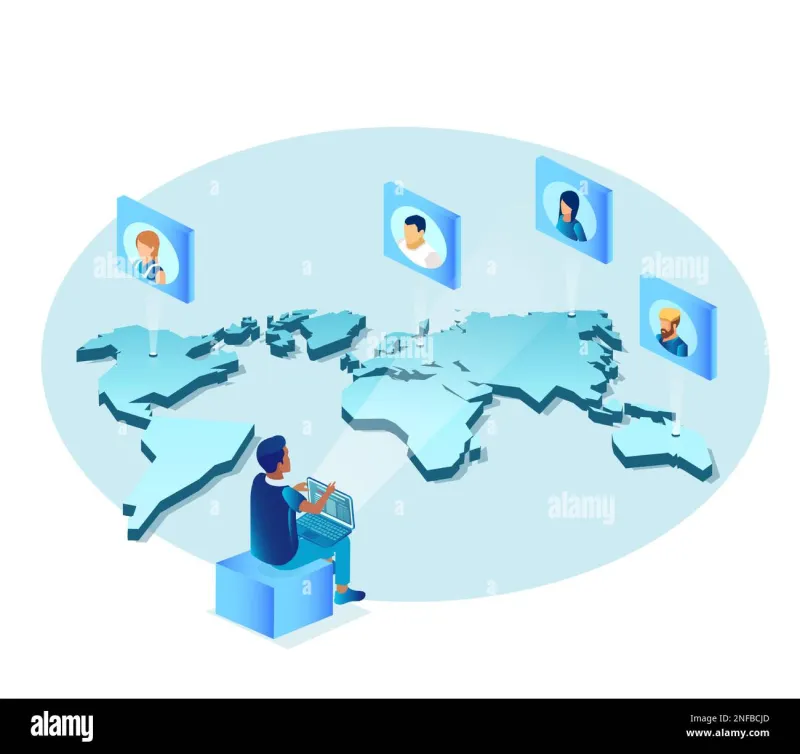
Photo: independent creator working on laptop with community chat on screen, via c8.alamy.com
There's a particular kind of dread that every independent creator knows. You spend two weeks on a video — scripting, filming, editing, re-editing — and then you watch it flatline in the first 48 hours because the algorithm decided, for reasons nobody fully understands, that today wasn't your day. Your most loyal fans never even saw it. Meanwhile, some recycled reaction clip is racking up a million views.
This is the reality of building a creative career on platforms that were never actually designed for creators. They were designed for engagement. For ad revenue. For time-on-app metrics that have nothing to do with whether your work is good or whether your audience actually wants to find you.
A growing number of independent creators have decided they're done waiting for the algorithm to come around. Instead, they're building their own lanes — and the results are quietly reshaping what a sustainable creative career actually looks like in 2024.
The Landlord Problem
Here's the uncomfortable truth about YouTube, TikTok, Instagram, and every other major platform: you don't own your audience. You're renting access to them, and the rent goes up constantly.
Organic reach on Instagram has reportedly dropped to somewhere between 1% and 5% for most accounts. YouTube's recommendation system has become so opaque that even creators with millions of subscribers regularly see videos underperform with their own fanbase. TikTok's For You Page is brilliant at finding new audiences — but terrible at maintaining consistent access to the ones you've already built.
"I had 200,000 followers on Instagram and I was getting like 3,000 views on a Reel," says Dani Ortega, a lifestyle creator based in Austin who documents sustainable fashion and thrift culture. "Those aren't strangers. Those are people who hit 'follow' because they wanted to see my stuff. And the platform was just... not showing it to them."
Ortega's response wasn't to post more, optimize harder, or chase trending audio. She started a Discord server.
Discord as the New Living Room
What started as a gaming-adjacent communication tool has quietly become one of the most powerful community infrastructure options available to independent creators. Discord servers don't have feeds. They don't have algorithms. If someone's in your server and they open the app, they see what's happening — full stop.
For creators who've spent years trying to crack the code of platform visibility, that simplicity is almost radical.
Ortega's server, which she calls "The Thrift Haul," now has over 4,000 members who share finds, ask styling questions, and get early access to her content before it goes live anywhere else. "It's chaotic and messy and I love it," she says. "It feels like a community instead of a broadcast."
The financial implications are real, too. Discord communities often feed directly into Patreon memberships, where creators can offer tiered access — exclusive content, early drops, direct Q&As, or even one-on-one consultations. This model transforms the creator-audience relationship from parasocial performance into something closer to a subscription service with actual human texture.
Marcus Webb, a political and cultural commentator based in Atlanta with a podcast that covers Black American identity and pop culture, built a Patreon with over 1,800 paying members before he ever cracked 50,000 followers on any major platform. "The numbers that get thrown around in this industry are mostly vanity," he says bluntly. "What matters is: how many people care enough to pay? Even five bucks a month? That's a real relationship."
Webb's Patreon brings in more than his ad revenue across all platforms combined. He's not an outlier anymore.
The Portfolio Platform Strategy
Going "off-platform" doesn't mean abandoning the big apps entirely. The smartest creators right now are using a hub-and-spoke model: they maintain a presence on TikTok, YouTube, or Instagram to attract new audiences, but they actively funnel those audiences toward owned or semi-owned spaces — newsletters, Discord servers, Patreon pages, or even their own websites.
Substack has become a major player in this ecosystem, particularly for creators whose work is more essay-driven or long-form. The platform's built-in monetization, combined with direct email delivery, means that a Substack post actually reaches subscribers — no algorithm required.
"I treat TikTok like a billboard," explains Jess Kwon, a Korean-American food creator based in Los Angeles who runs a Substack about Asian-American culinary identity. "It's advertising. I'm not trying to live there. I'm trying to get people to come to where I actually live."
This kind of intentional platform architecture requires a different mindset than the growth-at-all-costs approach that dominated the early creator economy. It's slower. It prioritizes depth over breadth. But the creators who've committed to it tend to describe something that sounds almost foreign in this industry: stability.
What "Sustainable" Actually Means
The creator economy has a burnout problem that's been well-documented but not particularly well-solved. The algorithm's hunger for constant content is essentially incompatible with human creative cycles. You can't run a sprint indefinitely.
Decentralized community models offer something the platform-first approach doesn't: breathing room. When your revenue is tied to Patreon memberships rather than monthly view counts, you can take a week off without watching your income collapse. When your community lives in a Discord server, you can post a voice note saying "hey, I'm taking a beat" and your people will actually see it.
"I went from posting every single day to posting when I have something worth saying," says Webb. "My Patreon grew during the months I slowed down because people could feel that the quality was going up."
This isn't a model that works for every creator — it requires an existing base of highly engaged followers, a genuine willingness to invest in community infrastructure, and a product (content, personality, expertise) that people value enough to pay for directly. It's not a shortcut. But for the creators who've made it work, it represents something the algorithm could never offer: a career that belongs to them.
The platforms aren't going anywhere. But neither are the creators who figured out they didn't have to live or die by them.