Two Creators Enter, Nobody Wins: The Hidden Wreckage Behind the Collab Economy
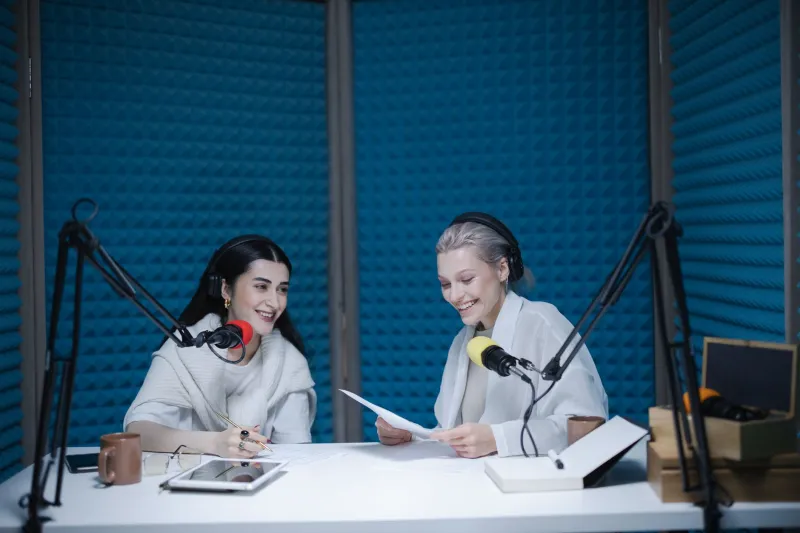
On paper, it sounds like a no-brainer. Two creators. Two audiences. One video. You do the math and it feels like printing money — exposure, cross-pollination, a mutual credibility bump. Brands love it. Managers push for it. The comment sections eat it up, at least for the first forty-eight hours.
Then the views plateau. The new subscribers don't stick. One creator's engagement tanks. The other quietly stops tagging their partner in Stories. And somewhere in a group chat neither of them will screenshot, the whole thing quietly dies.
Creator collabs aren't the growth hack they're sold as. For a lot of independent creators, they're a slow-motion trap — and the internet is littered with careers that never fully recovered from walking into one.
The Audience Mismatch Nobody Talks About
Here's the thing about audiences: they're loyal to a vibe, not just a face. When you follow a creator, you're signing up for a specific emotional experience — their humor, their rhythm, their aesthetic, the particular way they see the world. That contract is surprisingly fragile.
Bring in another creator, and suddenly there are two competing gravitational pulls in the same piece of content. If the tones don't match — and they rarely do as perfectly as the collab pitch deck suggests — the audience feels the friction even if they can't name it. Watch times drop. Completion rates suffer. The algorithm notices before the creator does.
There's also the follower migration problem. When two audiences collide, the crossover isn't always as clean as the subscriber count implies. A beauty creator with a loyal Gen Z following and a finance creator with a millennial audience might have overlapping demographics on a spreadsheet. In reality, the viewers who show up for one have zero interest in sitting through the other — and they'll bounce fast enough to tank the video's performance window before it ever gets a real push.
The Ego Math Nobody Wants to Admit
Beyond the data, there's the human stuff — which is messier and way harder to fix.
Creators who've built something from nothing tend to have strong opinions about how their content should look, sound, and feel. That's not a character flaw; it's literally how they got good. But put two of those people in a shared creative space and the friction is almost inevitable. Who drives the concept? Who gets the better camera angle? Whose editing style wins? Whose audience gets centered in the final cut?
These aren't petty questions. They go straight to the core of what each creator has spent years building. When the answers aren't settled upfront — and they almost never are — the resentment seeps into the content itself. Audiences are more perceptive than creators give them credit for. They clock the stiffness, the forced laughs, the moments where two people are performing chemistry they don't actually have.
And when the collab implodes behind the scenes, the public fallout can be brutal. Fandoms take sides. Old comments get screenshotted. The "we just grew in different directions" post drops and nobody believes it. What started as a reach play ends up as a PR crisis for both parties.
The Algorithm Doesn't Know What to Do With You Anymore
This part doesn't get discussed enough: collabs can genuinely confuse the recommendation engine, and the effects linger long after the video is gone.
Platforms like YouTube and TikTok spend enormous processing power building a model of who you are and who wants to see you. Your niche, your tone, your posting cadence — all of it feeds a profile that determines who gets served your content. Collabs introduce noise into that profile. If your channel suddenly attracts a flood of viewers who aren't your usual demographic, the algorithm doesn't necessarily reward you for the expansion. It recalibrates. Sometimes it gets it wrong. And getting it wrong can mean weeks or months of suppressed reach while the system figures out what you are again.
For smaller creators especially, that window of confusion can be catastrophic. You don't have the subscriber base to absorb the volatility. One bad algorithmic read and you're fighting to claw back momentum you spent a year building.
When It Does Work — and Why That's the Exception
None of this means collabs are universally doomed. There are partnerships that genuinely work — but they tend to share a few things in common that the failed ones don't.
The creators involved usually have genuinely overlapping audiences, not just similar demographics on paper. Their creative styles are complementary rather than competing. And critically, both parties come in with aligned expectations — about ownership, about promotion, about what success actually looks like. They've had the awkward conversation before the cameras turned on.
The collabs that survive also tend to be built on real relationships, not strategic convenience. When two creators have been genuinely in each other's corners for years, that chemistry is real and the audience can tell. It reads differently than two people who slid into each other's DMs because their management teams thought the numbers made sense.
The difference between a collab that builds something and one that burns it down often comes down to honesty — with each other and with yourselves about whether you're doing this because it's right for the work or because someone told you it was smart for the numbers.
The Case for Staying Solo
There's a quiet movement happening among independent creators who've watched the collab cycle play out enough times to know better. They're doubling down on their own lanes — building deeper rather than wider, prioritizing the audience they have over the one they might borrow for a week.
It's not as flashy. It doesn't generate the same kind of social media moment. But the creators who are actually building sustainable careers — the ones still here in year five, year seven, year ten — are largely doing it by protecting the thing that made people show up in the first place: a singular, consistent, genuinely irreplaceable point of view.
The collab economy will keep selling the dream of easy growth. Two names in a thumbnail, a comment section full of "I love these two together," a short-term spike that looks great in a deck.
But the internet has a long memory. And so does the algorithm.
Sometimes the most radical move a creator can make is staying exactly who they are — alone, on purpose, and completely turned out.