The Invisible Wall: How Platforms Engineer the Exact Moment Your Growth Stops
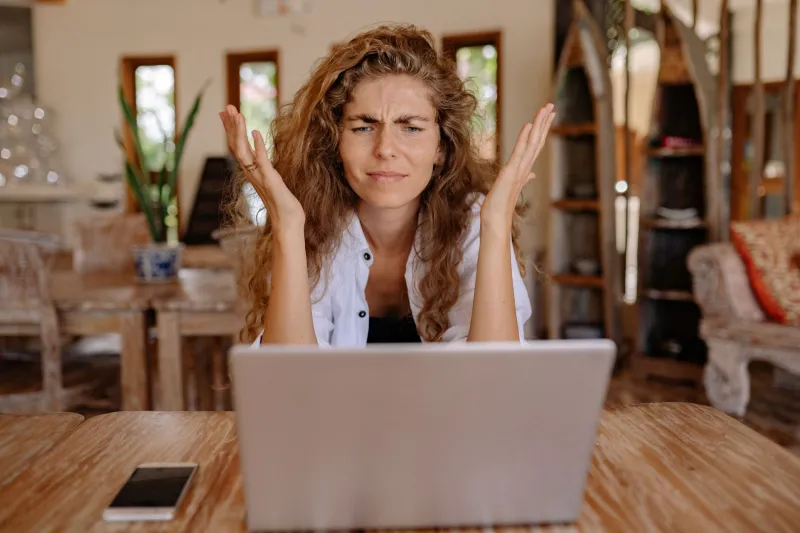
Something weird happens when you hit 9,800 followers. Ask any creator who's been building for more than a year and they'll describe the same eerie experience — the numbers slow down, engagement starts acting strange, and reach quietly collapses like someone turned a dial. Then you hover. For weeks. Sometimes months. Right below a round number that feels almost cruel in its precision.
This isn't a conspiracy theory. It's a pattern so consistent that independent creators across completely different niches, platforms, and audience demographics are documenting the exact same thing. And the platforms? They're saying nothing.
The Numbers That Keep Coming Up
Data analyst and creator strategist Dani Okafor has been tracking growth curves for indie creators since 2021. What started as a side project cataloguing her own stalled TikTok account turned into something much bigger. "I started asking other creators to share their analytics screenshots," she explains. "I wasn't expecting to see what I saw. The plateaus were clustering around the same thresholds — 10K, 50K, 100K, 500K — regardless of content type, posting frequency, or even which platform they were on."
Okafor mapped data from over 200 creators across YouTube, TikTok, and Instagram. The results were striking. Creators routinely experienced growth slowdowns of 60 to 80 percent at these specific follower counts, with some accounts essentially flatlining for 90-plus days before either breaking through or abandoning the effort entirely. The ones who broke through? Almost all of them had either run paid promotions, gotten boosted by a platform-featured placement, or gone viral through an external event outside their control.
Translation: organic growth has a ceiling, and the ceiling appears to be intentional.
"It Felt Like the Platform Forgot I Existed"
Marcus Webb runs a mid-size YouTube channel focused on independent film criticism — the kind of thoughtful, unsponsored content that platforms used to champion in their "support creators" marketing campaigns. He hit 48,000 subscribers in the spring of 2023 after two years of steady work, and then the floor dropped out.
"My impressions tanked. My click-through rate was fine, watch time was fine, everything looked healthy internally," he says. "But YouTube just stopped putting my videos in front of new people. I went from gaining 2,000 subscribers a month to maybe 200. I wasn't doing anything differently."
Webb spent four months testing variables — different thumbnails, adjusted titles, varying upload schedules. Nothing moved the needle. Then he ran a $150 YouTube promotion campaign on one video. His subscriber count jumped 1,800 in a week. "I felt sick about it," he admits. "Not because I spent the money, but because it confirmed what I suspected. The reach was always available. They were just holding it back."
Algorithmic Gatekeeping or Market Saturation?
The platforms will tell you — when they tell you anything at all — that these slowdowns are natural. Markets get saturated. Audiences have limited attention. Discovery gets harder as more creators compete for the same eyeballs. And honestly? There's some truth in that. The creator economy has exploded. Competition is real.
But that explanation doesn't fully account for why the thresholds are so consistent across different platform architectures. YouTube's recommendation engine and TikTok's For You page operate on fundamentally different logic. Instagram's algorithm has been rebuilt multiple times. Yet the walls appear at eerily similar places.
Media economist Priya Chandrasekaran has a more pointed theory. "These platforms have a vested interest in keeping a large pool of creators in a state of almost-success," she says. "A creator with 48,000 followers is still deeply invested in the platform. They're producing content, driving engagement, keeping users on the app. But they haven't hit the threshold where they might start demanding better revenue splits or negotiating power. That middle zone — aspirational but not yet powerful — is extremely profitable for the platform."
She calls it "managed dependency." Keep creators close enough to the dream that they keep producing, but far enough that they never accumulate enough leverage to make demands.
The Pay-to-Grow Pipeline
Here's where it gets really uncomfortable. Every major platform now offers creators some version of paid promotion — boosted posts, paid discovery tools, sponsored placement. And the timing of when these products get pushed to creators is telling. You start seeing the upsells right around the time your organic growth slows down.
Instagram's "Boost" prompts, YouTube's promotional tools, TikTok's Promote feature — they all surface most aggressively to accounts sitting in that 10K-to-100K range. The accounts, in other words, that are most likely to be experiencing a plateau and most likely to be desperate enough to pay for a solution.
"It's a perfect funnel," says Okafor. "They create the problem and sell you the solution. And the solution works just enough to keep you believing in it without ever fully solving the underlying issue."
Creators who've paid for boosts consistently report the same outcome: a short-term bump followed by a return to the plateau. The new followers gained through paid promotion tend to have lower engagement rates, which can actually hurt organic reach metrics long-term — potentially making the problem worse.
The Ones Who Broke Through (Without Paying)
Not everyone gets stuck forever. Some creators do punch through the ceiling, and their stories reveal something important about how these systems actually work.
Almost universally, organic breakouts happen through one of two mechanisms: external virality (a tweet, a Reddit post, press coverage, or a celebrity mention pulling traffic from outside the platform) or platform-selected featuring (getting picked up by an editorial team or algorithmic showcase that the creator had no control over).
Both scenarios have something in common — they bypass the normal recommendation system entirely. Which suggests the ceiling isn't about content quality or audience demand. It's about where the traffic is being directed, and who's doing the directing.
"The platforms are curators whether they admit it or not," says Webb. "They're making choices about who grows and who doesn't. They just hide those choices inside the language of neutral algorithms."
So What Do You Actually Do?
Creators who've navigated plateaus successfully tend to share a few common strategies. Building email lists and direct audience relationships outside the platform ecosystem is the most cited — if the platform can throttle your reach, you need a channel they can't touch. Cross-platform distribution helps too, not just for redundancy but because a surge on one platform can sometimes trigger algorithmic attention on another.
But the most honest advice comes from Okafor, who spent a year fighting her own plateau before reframing her entire approach. "Stop optimizing for the platform's metrics and start optimizing for your actual community," she says. "The creators who seem most at peace are the ones who decided the ceiling wasn't the point. The point was the people already in the room."
That's easier said than done when you've spent two years grinding toward a number that keeps sliding out of reach. But it might be the most radical thing a creator can do in a system designed to keep them chasing.
The wall is real. The question is whether you're going to keep running at it — or build something on your side of it.